Live Review
Palm Tree Music Festival Finds Its Groove in Montecito
The festival’s second year expanded into two days of sunsets, nostalgia and electronic spectacle, with The Chainsmokers, Zedd, Kygo and T-Pain leading a weekend that felt bigger without becoming overwhelming.
Carpinteria · Santa Barbara Polo & Racquet Club
Published October 20, 2026 · Event October 10, 2026
Words by Andrew Wong
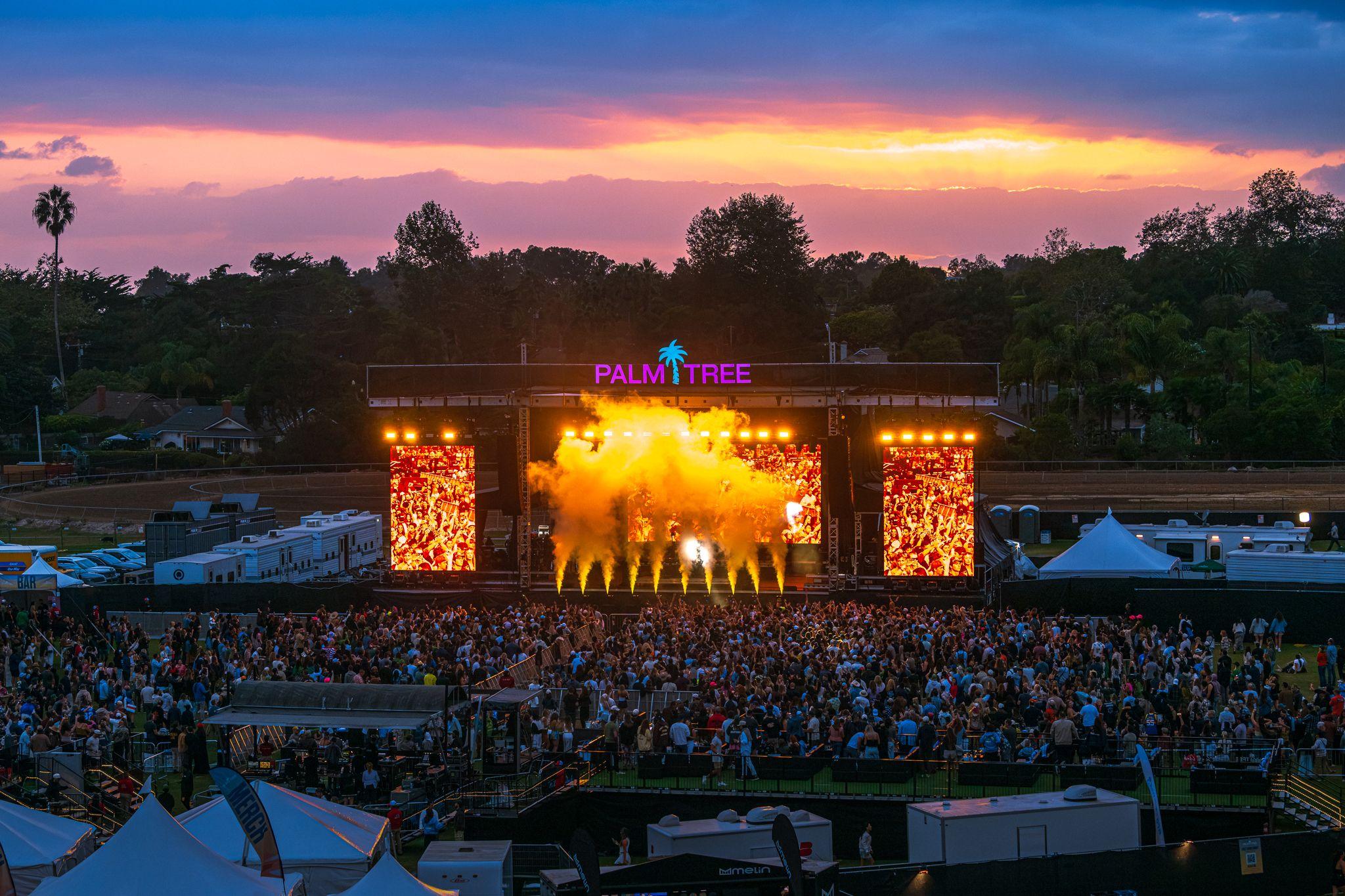
Palm Tree Music Festival could have gotten much bigger in its second year in Montecito.
Instead, it mostly got longer.
After debuting at the Santa Barbara Polo & Racquet Club as a single-day event in 2025, Palm Tree returned Oct. 10 and 11 with two days of music, twice the number of sunset transitions and a lineup that stretched from The All-American Rejects and T-Pain to The Chainsmokers, Zedd and festival co-founder Kygo. But the basic idea stayed remarkably compact: one stage, a relatively small field and a schedule where nobody had to choose between two artists playing at the same time.
That simplicity may be the festival’s biggest advantage.
At a time when major festivals often turn the day into a negotiation between overlapping sets and long walks, Palm Tree Montecito moved almost like a concert bill. An artist finished, the stage reset, and the crowd stayed put. The official timetable left clear gaps between every act rather than forcing competing stages into the same hour.
The result felt less like navigating a festival and more like spending an afternoon that gradually became a very large party.
That transition was especially apparent Saturday.
Early sets from Gage Vuu, TOON and Natalie Jinju gave way to The All-American Rejects as daylight began fading behind the polo grounds. Jinju, a USC popular music student, was one of the weekend’s youngest names, while The All-American Rejects arrived with more than two decades of instantly recognizable material. Songs including “Dirty Little Secret,” “Move Along” and “Gives You Hell” turned the late-afternoon slot into the weekend’s first major nostalgia hit before the lineup moved almost entirely into electronic music for the rest of the night.
There is something slightly absurd about hearing a 2000s pop-rock chorus on a polo field framed by mountains, food stands and branded lounges.
It also worked.
Palm Tree’s lineup was broad enough that those pivots felt intentional rather than random. The festival has always been tied to Kygo’s polished, tropical-house-adjacent aesthetic, but Montecito increasingly seems willing to stretch the definition of what belongs inside that world.
The Chainsmokers made that particularly clear.
Their set still leaned on the songs that made the duo one of the defining crossover acts of the 2010s. “Closer,” “Paris,” “Something Just Like This” and “Don’t Let Me Down” gave the crowd obvious singalong moments, but reports from the festival also noted that the duo pushed considerably harder between those hits, folding techno and dubstep into a set that was heavier than their pop catalog might suggest. Flame jets, CO2 bursts and towering LED production arrived as the last of the sunset disappeared.
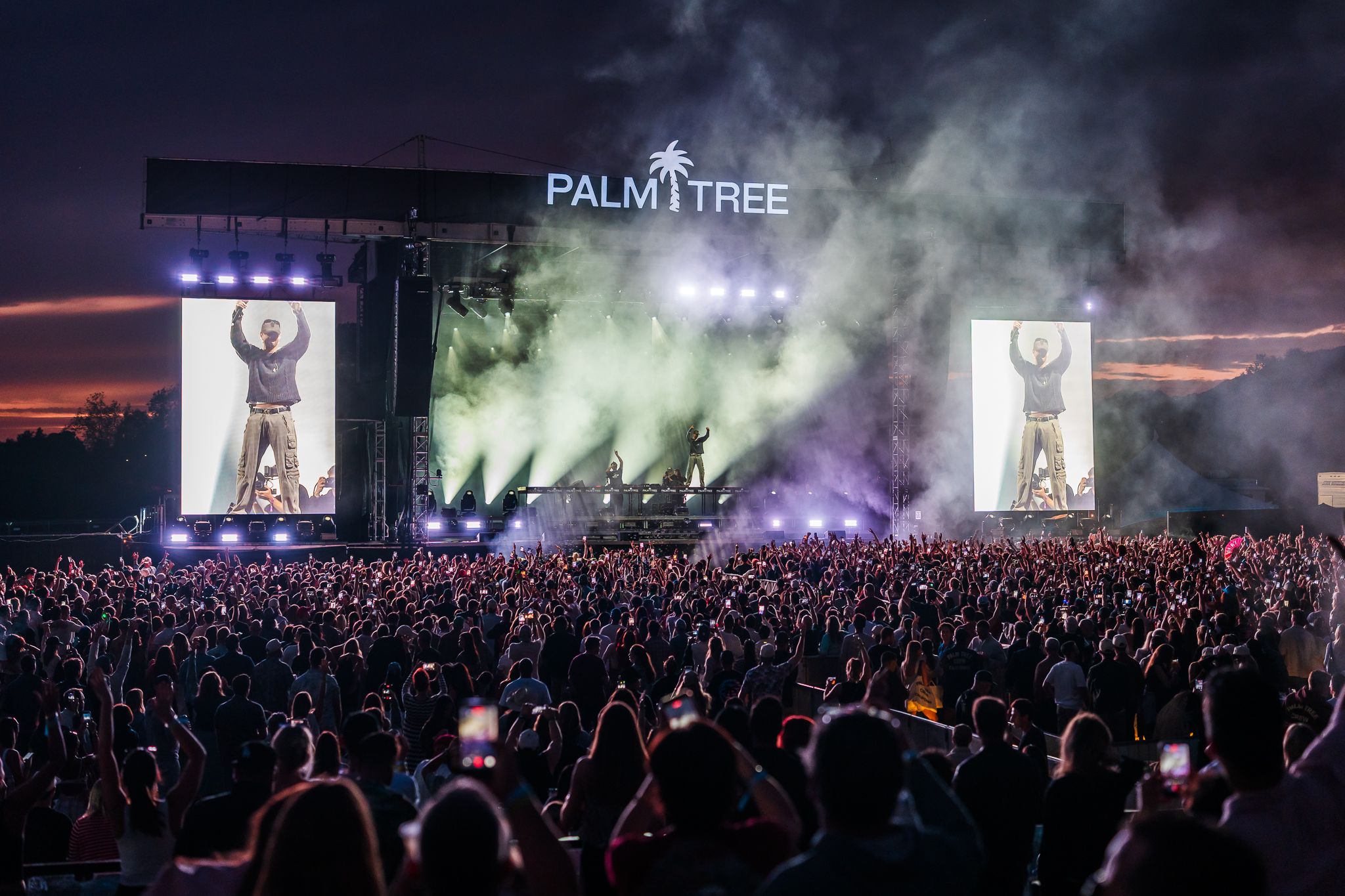
By the time Zedd took over, the setting had completely changed.
The mountains and pink evening sky that had dominated the background only a couple hours earlier were gone, replaced by lasers, strobes and large-scale visual production. USC Annenberg’s coverage singled Zedd out for the weekend’s most elaborate light show, with lasers cutting across the polo field in sync with the drops. His closing interpretation of “Clarity” incorporated strings, giving one of his most familiar songs a more restrained ending after a set built largely around spectacle.
Saturday effectively showed both sides of Palm Tree Montecito. In daylight, the location was the production. After dark, the production had to compete with it.
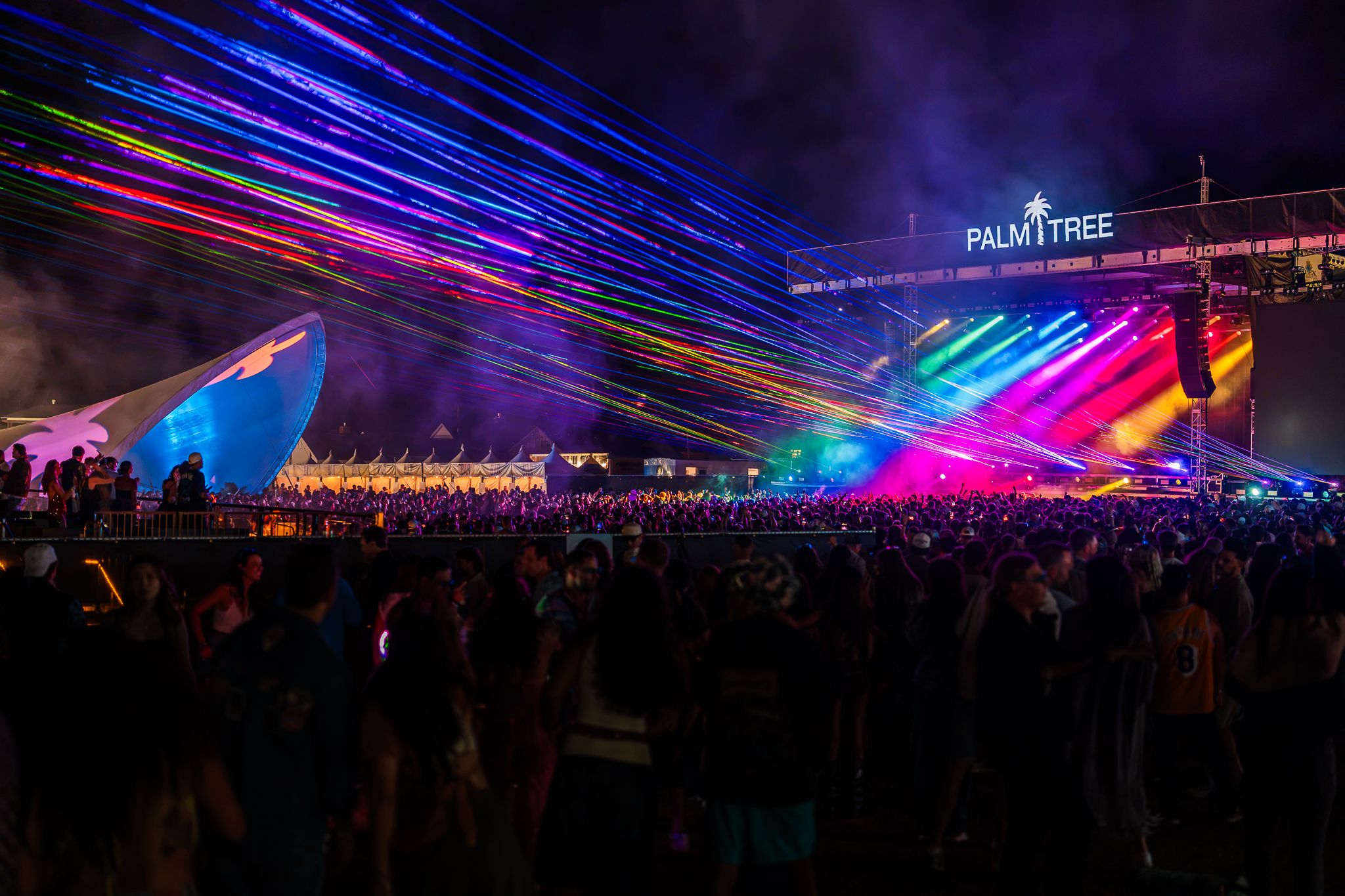
Sunday started differently.
Cloud cover replaced Saturday’s sunset glow, and the lineup leaned much closer to the dance-music identity associated with Palm Tree Crew. Myles O’Neal and Frank Walker led into Loud Luxury, whose set sent purple smoke over the crowd before Kygo took the stage shortly after 7 p.m.
If Saturday demonstrated how far Palm Tree could stretch, Kygo’s set was the reminder of what the entire festival was built around in the first place.
He moved through “It Ain’t Me,” “Higher Love,” “Born to Be Yours” and “Firestone,” while also bringing out Justin Jesso for “Stargazing.” Local coverage reported that Ava Max also appeared as a surprise guest, adding another live vocalist to a set that could otherwise have worked comfortably as a straightforward DJ performance. Kygo also incorporated Avicii’s “Levels,” turning a familiar festival staple into a tribute to the late Swedish producer. Noozhawk reported that Montecito marked Kygo’s final show of 2026.
The staging reflected his connection to the festival without becoming too self-congratulatory. Vintage-style illuminated KYGO signs framed the performance, while fireworks and pyrotechnics returned the night to the polished, aspirational atmosphere that Palm Tree Crew has built its brand around.
But Kygo did not close his own festival.
T-Pain did.
That decision ended up being one of the smartest pieces of programming all weekend.
After hours of house and electronic music, T-Pain arrived with a catalog almost entirely built around recognition. “Bartender,” “Cyclone,” “Up Down (Do This All Day),” “Low,” “Kiss Kiss” and “Hey Baby (Drop It to the Floor)” turned the final hour into something closer to a giant 2000s and early-2010s throwback party.
And then it started raining.
Not enough to derail the show. A brief shower caught the stage lights while the crowd stayed in place through the closing songs. After a weekend built so heavily around ideal California weather and carefully staged hospitality, the one genuinely uncontrollable production element became part of the finale.
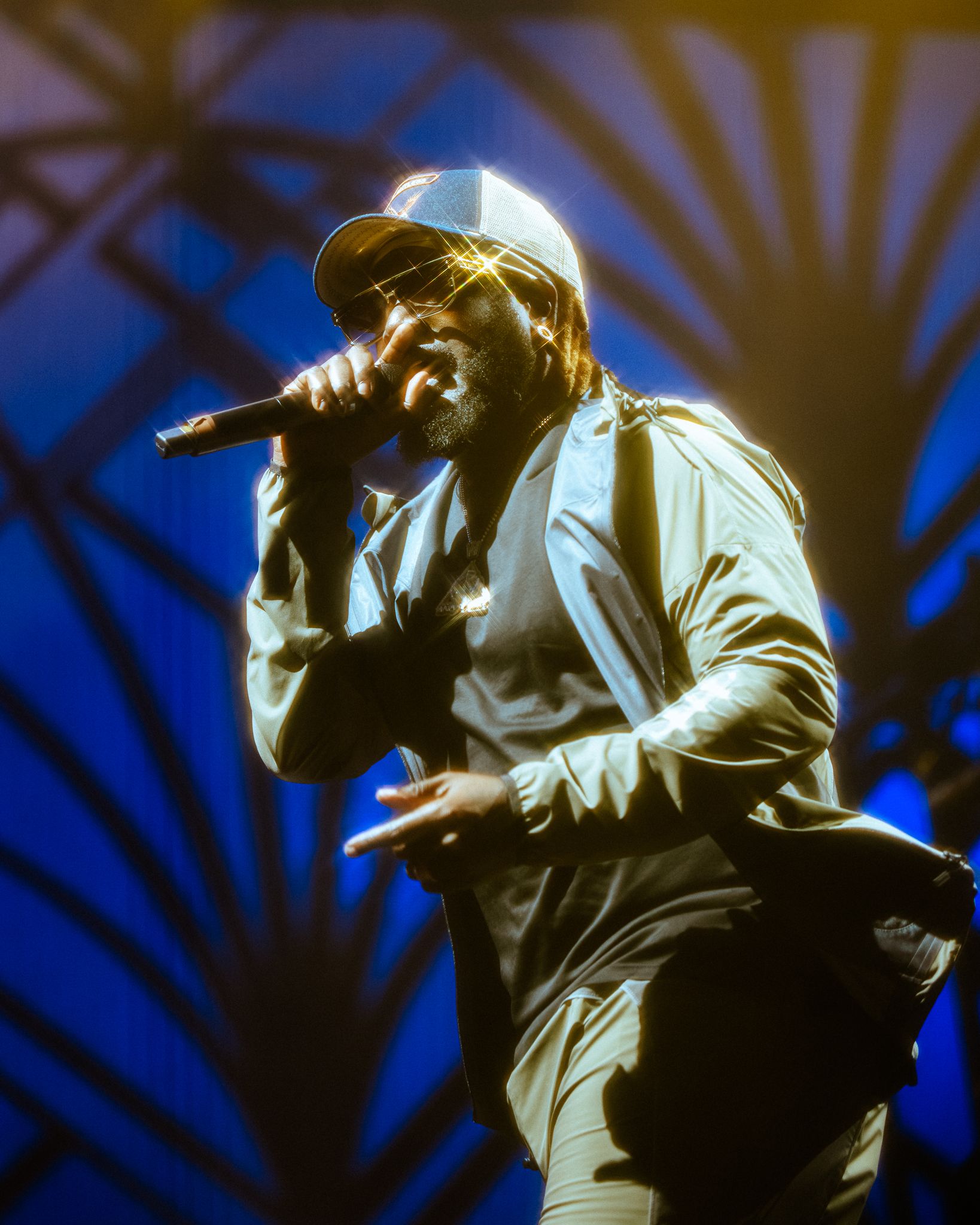
That balance between polish and informality is where Palm Tree Montecito feels most distinct.
The festival is unapologetically lifestyle-driven. The grounds included food vendors, bars and brand installations from partners including Don Julio, CELSIUS, Matua Wine, Aviator Nation, Saint James Tea, OluKai and LaCroix. The Palm Club pushed the experience even further toward hospitality, while VIP areas offered dedicated bars, lounges and closer viewing. The weekend also drew recognizable guests including Orlando Bloom and other actors, athletes and creators.
It would be easy for all of that to make the festival feel more like a branded weekend than a music event.
The small footprint helps prevent that.
There was still only one stage everyone eventually came back to. Whether someone spent the afternoon at a wine lounge, taking photos beside an activation or standing at the barricade, the festival reconvened around the same performances. There was no separate dance tent swallowing half the audience or second headliner playing across the grounds.
Even Palm Tree’s most obvious luxury elements existed around the music rather than in place of it.
That distinction matters because the festival is expanding quickly. Palm Tree Crew, founded by Kygo and manager Myles Shear, has taken versions of the event to destinations including Aspen, the Hamptons, West Palm Beach and Napa. Montecito itself doubled from one day to two after only a single year.
Usually, that is the stage when a festival starts adding more stages, more acts and more acreage.
Montecito suggests Palm Tree does not necessarily need to.
Its best moments came from the things that would be difficult to replicate at a conventional festival grounds: The All-American Rejects playing as the sun went down over the polo field; The Chainsmokers taking over as the sky turned dark; Zedd’s lasers spreading over a relatively intimate crowd; Kygo bringing his own festival back to its musical center; and T-Pain finishing the weekend as rain briefly fell through the lights.
Two days gave Palm Tree more room.
The impressive part was that it resisted filling every inch of it.
By 9:55 Sunday night, the stage screens had switched to a simple thank-you message. There has not yet been an announcement for a third Montecito edition, but after turning its one-day debut into a full weekend without losing the qualities that made the location interesting in the first place, Palm Tree has already made a convincing case for coming back.
Contributors
Words
Andrew Wong
Founder · Editor in Chief · Journalist · Photographer
Andrew Wong is the founder and editor in chief of R’Time in a Flash. A journalist and concert photographer, he covers live music across Los Angeles and Orange County through reporting, reviews, and original photography.